The Future of Virtual B2B Matchmaking Platforms
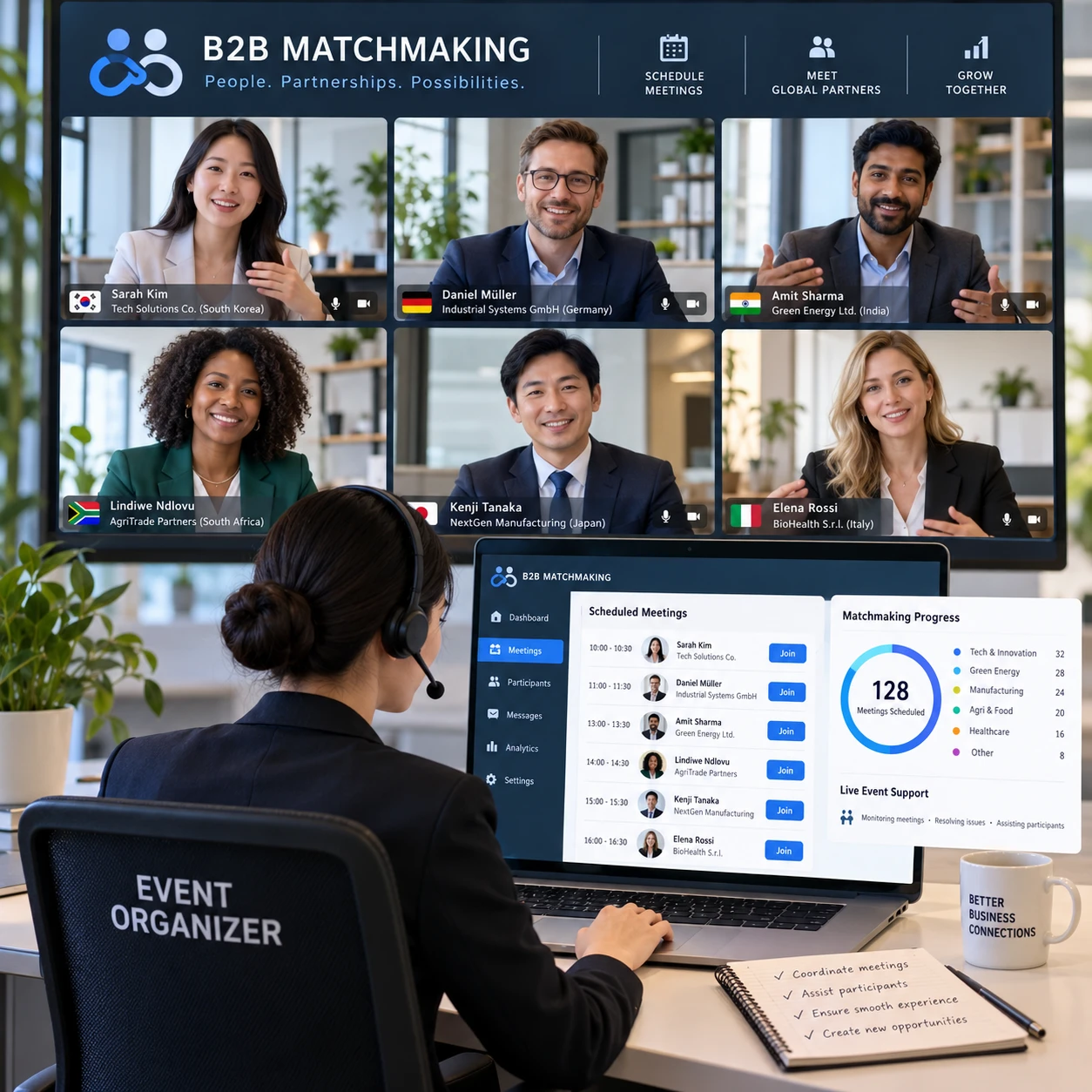
Virtual B2B matchmaking platforms help event participants find relevant buyers, sellers, and potential partners without being in the same place. Their future will depend less on novelty and more on whether they make it easier to identify the right people, hold purposeful meetings, and continue promising conversations afterward.
For organizers, that means treating matchmaking as a connected process rather than a feature switched on during registration. Better recommendations may help, but they still rely on clear event goals, useful attendee data, and support when plans change.
Why virtual matchmaking remains important for B2B events
Virtual matchmaking remains important because it helps buyers, sellers, and partners discover one another across geographic boundaries. It can make business networking more intentional than relying on chance encounters alone, especially at events with a large or widely distributed audience.
At a trade show, conference, or industry summit, attendees often have limited time to find the people most relevant to their goals. A virtual B2B matchmaking platform can let participants search profiles, express meeting interests, and schedule conversations before or during the event. That creates a more direct path from registration to a first business discussion.
The benefit is not simply that a meeting happens online. Well-designed buyer-seller matching can help a procurement team find suppliers with the right capabilities, or help a supplier focus on buyers who have a genuine use for its offer. The same approach can support partnership discovery, investor conversations, and cross-border business networking.
There are limits. A platform can widen access, but it cannot guarantee that every connection is relevant or that a conversation leads to a deal. Some participants also prefer in-person interaction for complex or sensitive discussions. Virtual matchmaking works best when it complements a clear event purpose and gives people an easy way to decline, reschedule, or continue a promising exchange.
How matching technology is evolving
Matching technology is likely to evolve through more useful profile-based recommendations, clearer explanations of why people are being paired, and more flexible ways to refine meeting suggestions. These improvements can raise relevance, but they depend on accurate attendee profiles and should not be treated as automatic guarantees.
Many platforms already use profile details such as industry, role, company, products, and stated interests to suggest connections. Future AI-powered recommendations may be better at interpreting how those details relate to event goals. For example, a buyer seeking a particular manufacturing capability may be matched with suppliers whose profile descriptions use different terminology but describe a similar offering.
Recommendations may also adapt as participants use the platform: saving profiles, requesting meetings, or updating their priorities. A useful system should make those signals visible and allow attendees to correct assumptions. If someone is shown a suggestion, a short explanation such as “matches your interest in distribution partners” is more actionable than an unexplained score.
Better matching is not the same as more matching. A long list of marginal suggestions can create extra work and reduce trust. Organizers should ask whether the platform lets participants set preferences, adjust availability, and see enough context to decide whether a meeting makes sense. Good data and clear intent remain more valuable than a complex algorithm fed incomplete profiles.
From introductions to productive business meetings
Productive virtual B2B meetings need more than an introduction: they need convenient scheduling, useful context, and a clear next step. Event management software can support the full journey from finding a contact to following up after the conversation.
Meeting scheduling should account for time zones, participant availability, meeting length, and whether a request needs approval. Calendar integrations and reminders can reduce missed appointments, while straightforward rescheduling helps when a session runs late or a participant’s plans change. These details are operational, but they affect whether a good match becomes a real conversation.
Context matters just as much. Before a meeting, participants should be able to review the other person’s role, stated objectives, and relevant company information. Organizers can provide a brief meeting prompt, such as identifying one shared challenge or a specific question to resolve. That makes a 15-minute conversation more focused without turning it into a rigid sales script.
Follow-up completes the process. Platforms may offer ways to exchange contact details, record a private note, or mark a conversation for later action. Organizers can also send a post-event reminder to reconnect, while respecting participants’ choices about sharing data. A scheduled meeting is a start, not an outcome; useful evaluation should consider attendance, perceived relevance, and follow-up activity, not just the number of appointments booked.
The role of hybrid events and human curation
Hybrid events can use virtual matchmaking to connect remote and in-person participants, while human curation helps ensure that suggested meetings fit the event’s purpose. The strongest approach combines convenient software with organizer judgment rather than relying on either one alone.
A hybrid event might let attendees browse profiles and request meetings before the event, then hold those conversations in person, online, or in a scheduled mix of both. This flexibility can help participants who cannot travel, extend the reach of a physical event, and create opportunities beyond the exhibition floor. It also introduces coordination needs: organizers must make meeting formats, locations, and time zones clear.
Human curation can improve the process when profiles are incomplete, a sector uses specialized language, or a high-value introduction needs careful handling. Event staff can review unusual requests, help a participant refine a profile, and suggest a connection that automated filters miss. A practical model is to let software handle discovery at scale while people resolve edge cases and support key meetings.
That support takes time and requires trained staff. A smaller event may not need manual review of every match, and too much intervention can feel intrusive. Organizers should identify where curation adds value, such as hosted-buyer programs or strategic partner meetings, and explain how decisions are made.
Challenges platforms need to address
Virtual matchmaking platforms need to address attendee data and privacy, profile quality, accessibility, participant engagement, and trust. If any of these fail, even sophisticated matching features may produce irrelevant suggestions or discourage people from taking part.
Privacy and consent should be clear before an attendee creates a profile. Participants need to know what information is visible, how it may be used for recommendations, and whether it will be retained or shared after the event. Organizers should collect only data that supports the event’s purpose and provide practical controls for updating or removing information. For guidance on privacy principles, consult the U.S. Federal Trade Commission’s privacy and security resources.
Data quality is another common weakness. A company name and job title rarely reveal what someone wants from an event. Short, structured questions about goals, capabilities, and preferred meeting types can help, but too many required fields may lower completion rates. Ask for information that can change a match decision, and explain why it is useful.
Accessibility and engagement need attention too. Platforms should work with assistive technologies, offer clear navigation, and account for different levels of digital confidence. Organizers also need to keep participants informed without flooding them with notifications. Trust grows when the platform makes it easy to report a problem, decline a request, and understand how matching decisions are made.
How organizers can prepare for the next generation of matchmaking
Organizers can prepare by setting measurable goals, improving profile data, testing the meeting journey, and choosing event management software that supports privacy and accessibility. Start with the outcomes the event needs, then select features that help achieve them.
- Define the purpose. Decide whether the priority is buyer-seller meetings, partner discovery, investor introductions, or broader business networking. Set a small number of measures, such as accepted meeting requests or attendee-rated relevance.
- Design useful profiles. Ask participants what they offer, what they are seeking, and who they want to meet. Keep fields concise and explain how responses affect recommendations.
- Test the complete journey. Check registration, profile editing, search, meeting requests, scheduling, reminders, video or venue access, and follow-up. Test with users in different time zones and with varied accessibility needs.
- Review privacy and support. Confirm what attendee data the vendor collects, who can access it, how long it is retained, and what controls participants have. Plan human support for scheduling problems and disputed matches.
- Evaluate and improve. Gather feedback on relevance and usability, then compare it with practical event measures. Use the results to revise profiles, meeting rules, and staffing for the next event.
When comparing platforms, look beyond the recommendation engine. Check whether the system integrates with registration and event management software, supports virtual and in-person meetings, handles schedule changes, and provides useful reporting without exposing unnecessary personal data. Ask vendors to demonstrate the attendee experience, not just the organizer dashboard.
The next generation of virtual B2B matchmaking will likely offer more adaptive recommendations and smoother hybrid workflows, but those gains are not certain or automatic. Organizers who pair thoughtful technology choices with reliable data, human support, and clear measures will be better placed to create meetings that are worth participants’ time.
Frequently asked questions
What is a virtual B2B matchmaking platform?
A virtual B2B matchmaking platform is software that helps business event participants find relevant contacts, request or schedule meetings, and communicate online. It may use profiles, search filters, and recommendations to support buyer-seller matching and business networking.
How can AI improve B2B matchmaking?
AI may help identify connections from profile details and stated goals, including relevant relationships that simple keyword searches miss. Its recommendations are only as useful as the information provided, so attendees should be able to review suggestions and correct their profiles.
Can virtual matchmaking work alongside in-person events?
Yes. Hybrid events can use virtual tools for discovery and scheduling while offering meetings online or at the venue. Organizers should make formats, locations, and timing clear so remote and in-person participants can take part fairly.
What should organizers look for when choosing a platform?
Look for easy profile management, relevant search and recommendations, flexible meeting scheduling, privacy controls, accessibility, support, and reporting aligned with event goals. Test the full participant journey before committing, since a feature list alone does not show whether attendees can use the platform effectively.