Top 10 B2B Networking Strategies for Maximum ROI
Most business networking produces weak returns not because the people in the room are wrong, but because the process around them is. In B2B, where a single partnership can be worth six or seven figures, leaving connections to chance is an expensive habit. The strategies below are built around one principle: structured intent converts faster than open-floor socializing.
Why ROI-Focused Networking Is Different in B2B
B2B networking operates on longer sales cycles, higher deal values, and multi-stakeholder decisions — which means the return on any given connection takes time to materialize and requires deliberate nurturing. This is fundamentally different from consumer networking, where a single conversation can produce an immediate transaction.
In a B2B context, the people you meet at a brokerage event or structured matchmaking session may not become clients for six to eighteen months. That timeline demands a process, not just a handshake. ROI-focused networking means knowing before you walk into any room what a successful outcome looks like: a qualified lead, a scoped proposal, a supplier shortlist entry, or a signed letter of intent.
The companies that consistently generate pipeline from events are those that treat networking as a business development function — with targets, preparation, and measurement — rather than a social activity attached to a conference.
Strategies 1–3: Getting the Right People in the Room
The highest-leverage networking decisions happen before the event starts. Who you send, who you target, and what you know walking in determines the ceiling on your return.
Strategy 1: Define Your Ideal Meeting Profile Before You Register
Lead qualification starts at the event selection stage, not during the coffee break. Before committing to any B2B matchmaking event or industry summit, define the exact profile of company and contact that would constitute a valuable meeting: sector, company size, geography, buying authority, and stage in the procurement cycle.
This profile becomes your filter. Use it to evaluate whether a given event's attendee list matches your targets. Many brokerage events publish participant directories in advance — use them. A morning spent reviewing profiles before arrival is worth more than a full day of unplanned conversations on the floor.
Strategy 2: Send Decision-Makers, Not Representatives
Your company delegation composition sends a signal about how seriously you treat a partnership opportunity. When the other side of the table is a procurement director or CEO, a junior sales representative creates an immediate credibility gap — and often can't answer the questions that matter.
The right delegation is lean and senior. One or two people with the authority to discuss terms, scope a pilot, or escalate internally will generate more actionable outcomes than a larger team without that mandate. For smaller companies, this is actually an advantage: the founder or director attending directly removes layers of approval that larger competitors have to navigate.
Strategy 3: Research Attendees and Prepare Targeted Talking Points
Pre-event research is where most delegations underinvest. Before any structured B2B meeting, spend time on the other company's recent activity — new markets entered, products launched, stated strategic priorities. This context lets you open with relevance instead of a generic pitch.
Prepare two or three specific questions per target meeting. These aren't small talk — they're diagnostic tools to assess fit quickly and signal that you've done your homework. The best partnership development conversations begin with "We noticed you expanded into [market] last quarter — how is that affecting your supplier requirements?" not "So, tell me about your business."
Strategies 4–6: Structured Meeting Formats That Drive Results
Open-floor networking consistently underperforms structured formats because it rewards extroversion over preparation, and luck over targeting. The three strategies below work because they remove randomness from the equation.
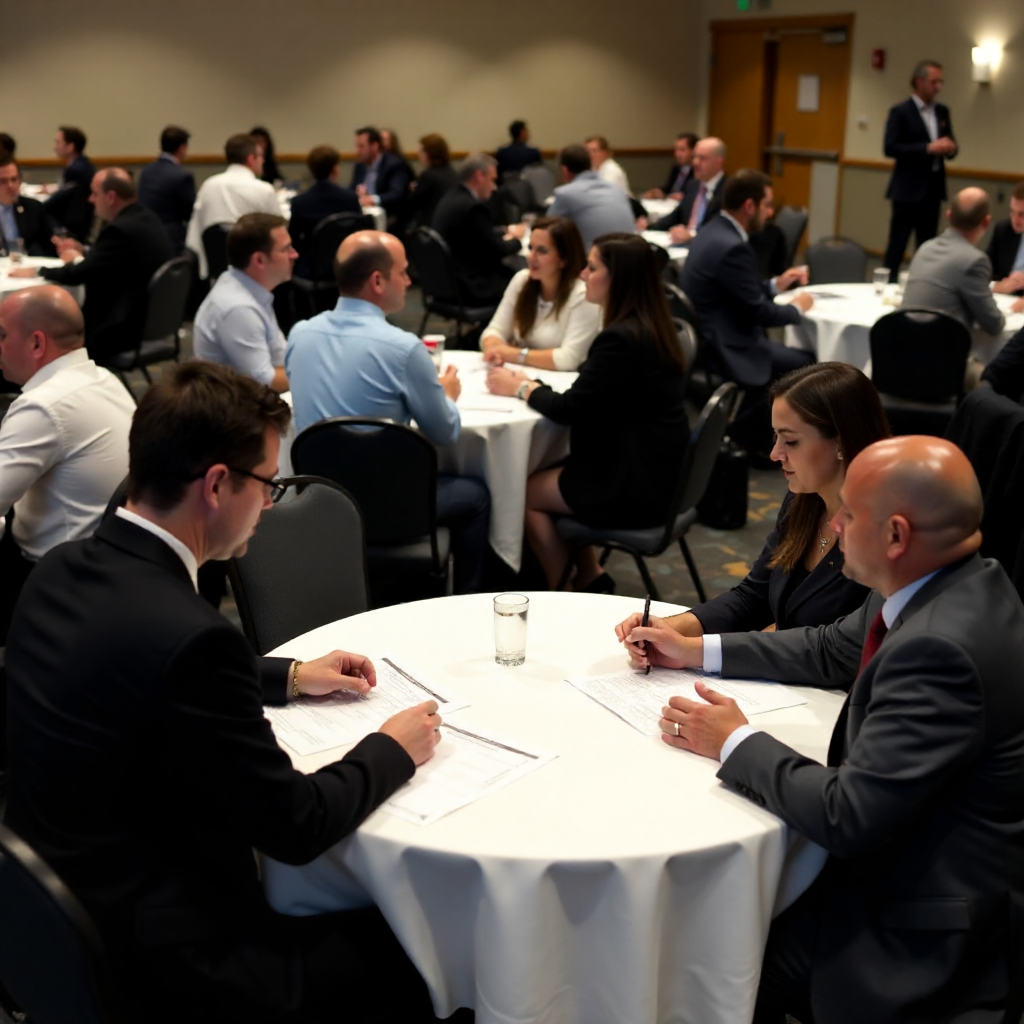
Strategy 4: Prioritize Pre-Scheduled One-to-One Meetings
Pre-scheduled meetings at brokerage events are the single most efficient networking format in B2B. Both parties arrive with context, time is fixed (typically 20–30 minutes), and the agenda is outcome-oriented from the first minute. There's no circling the room hoping to find the right person — the system places you in front of them.
This format also creates a sense of mutual commitment. The other party has agreed to the meeting, which means they've already self-selected as interested. Conversion rates from pre-scheduled one-to-one sessions to follow-up conversations consistently outperform cold floor introductions, often by a significant margin.
Strategy 5: Use Brokerage Event Formats for Market Entry and Supplier Discovery
Brokerage events — where an event facilitator matches participants based on mutual interest declarations — are particularly effective for two use cases: entering a new market where you lack an established network, and discovering qualified suppliers or distribution partners without a lengthy procurement process.
The matchmaking infrastructure does the targeting work that would otherwise require months of outreach. A well-run B2B matchmaking event can compress what might be six months of cold prospecting into two days of facilitated conversations. Choosing event facilitation platforms that use detailed company profiles and need/offer matching — rather than simple sector tagging — improves the quality of those matches substantially.
Strategy 6: Participate in Hosted Buyer Programs Where Available
Hosted buyer programs invert the typical event dynamic: instead of exhibitors chasing buyers on the floor, qualified buyers are brought in with guaranteed meeting slots. If your company qualifies as a buyer in a given sector, these programs offer access to pre-vetted suppliers with a level of efficiency that standard event attendance can't match.
For suppliers, the value is equally clear — every meeting is with a confirmed decision-maker who has expressed interest in your category. The trade-off is selectivity: hosted buyer programs typically have strict qualification criteria, and the application process requires time investment upfront.
Strategies 7–8: Maximizing Every Interaction During the Event
During the event itself, the priority shifts from preparation to extraction — getting the most useful information and clearest next steps from every conversation.
Strategy 7: Qualify Fast, Listen Longer
The first three minutes of any B2B meeting should answer one question: is there a real commercial opportunity here? Use your prepared diagnostic questions to establish whether the other company has a relevant need, the budget to act on it, and a timeline that matches your pipeline priorities.
If the answer is yes, stop presenting and start listening. The most common mistake in structured meetings is spending the session pitching when the other party is ready to discuss specifics. Active listening in this context means asking follow-up questions about their constraints, preferred partners, and internal approval process — information that makes your follow-up dramatically more targeted.
Strategy 8: Use a Simple Meeting Agenda to Stay Outcome-Oriented
A one-page meeting agenda — even a brief one sent 24 hours in advance — keeps pre-scheduled sessions from drifting into unfocused conversation. It signals professionalism and gives both sides a shared framework for the time available.
Structure it simply: a two-sentence company overview, one or two questions for the other party, and a clear "proposed next step" field at the bottom. Filling in that last field before the meeting ends is the discipline that separates productive events from expensive ones. Leave every session with an agreed action, even if it's just a call to be scheduled within two weeks.
Strategies 9–10: Post-Event Follow-Up and Relationship Conversion
The follow-up phase generates more lost ROI than any other part of the networking process. Most contacts go cold not because interest was absent, but because follow-up was slow, generic, or never happened.
Strategy 9: Follow Up Within 48 Hours With Specific Reference
Send your follow-up strategy into motion before the event ends. On the final evening, review your meeting notes and draft personalized outreach for your top five contacts. Reference something specific from the conversation — a challenge they mentioned, a market they're entering, a question they asked about your product. Generic "great to meet you" emails produce near-zero response rates in B2B.
The 48-hour window is not arbitrary. Research on sales follow-up consistently shows that response rates drop sharply after the first two days post-event, as attention returns to day-to-day priorities. Faster follow-up signals that you're serious and organized — qualities that matter to procurement-minded decision-makers.
Strategy 10: Convert Contacts Into Pipeline With a Structured Sequence
A single follow-up email rarely closes a B2B deal. Build a short, structured sequence: initial follow-up with specific reference, a second touchpoint sharing a relevant resource or case study, and a third that proposes a concrete next step — a scoped call, a proposal, or a site visit.
Log every contact and interaction in your CRM immediately. Business networking platforms increasingly offer post-event contact export, but the data is only useful if it enters a system with assigned ownership and scheduled tasks. Without that discipline, even the best brokerage event meetings decay into business cards in a drawer.
How to Measure Networking ROI After a B2B Event
Networking ROI is measurable when you define the right metrics before the event, not after. The most practical framework tracks three stages: meetings held, qualified leads generated, and deals progressed.
Start with ROI measurement inputs: total cost of event participation (registration, travel, staff time) divided against the pipeline value of qualified leads generated. A lead that enters a proposal stage with a realistic close probability is a quantifiable asset — even if it hasn't closed yet.
Key metrics to track:
- Meetings-to-leads ratio: what percentage of pre-scheduled meetings produced a qualified follow-up conversation
- Leads-to-proposals ratio: how many qualified contacts progressed to a formal scoping or proposal stage
- Time-to-first-response: average hours between event end and first follow-up sent
- Pipeline value attributed to event: total weighted deal value from contacts originating at the event, tracked over a 6–12 month window
CRM integration is essential here. Tag all contacts by event source so you can run attribution reports at 90, 180, and 365 days. B2B sales cycles mean some deals won't close within the quarter — but the pipeline data still demonstrates value to stakeholders who control travel and events budgets.
Choosing the Right B2B Networking Format for Your Goals
The best networking format depends on your specific commercial objective, not on which event has the largest attendance or the most impressive venue.
Match your goal to the format:
- New market entry: brokerage events in the target sector or geography, where matchmaking infrastructure connects you with local buyers and distributors who already operate in the market
- Supplier discovery or procurement: hosted buyer programs or reverse matchmaking events where suppliers present to qualified buyers in structured sessions
- Investor access: pitch-format events and investor matchmaking programs, where the format is explicitly designed for funding conversations rather than commercial partnerships
- Strategic partnerships: industry-specific summits with curated attendee lists and facilitated matchmaking, where both parties share a sector focus and are evaluating alliance potential
- Pipeline acceleration: account-based events organized around existing prospects, where the networking is designed to deepen relationships already in progress
No single format serves all objectives. A company using brokerage event matchmaking for supplier discovery will need a different approach than one using the same type of event for market entry. Being clear about the objective before selecting the format is what keeps networking spend aligned with business development priorities — and what separates teams that consistently generate ROI from those that collect badges and business cards.
Frequently Asked Questions
What is the difference between B2B matchmaking and general business networking?
B2B matchmaking uses a structured system — typically managed by an event facilitator — to pair companies based on declared needs and offers before the event begins. General business networking is unstructured: attendees circulate and initiate conversations based on proximity or chance. Matchmaking consistently produces higher-quality first meetings because both parties have already indicated mutual interest before sitting down together.
How many pre-scheduled meetings should a company target per event?
A realistic and productive target for a two-day brokerage event is between eight and fourteen pre-scheduled meetings per delegate. Fewer than eight underutilizes the format; more than sixteen tends to reduce the quality of preparation and the depth of individual conversations. Quality of targeting matters more than volume.
How soon after a brokerage event should follow-up happen?
Within 48 hours of the event ending, ideally sooner. The first follow-up should reference the specific conversation, not just the event. Waiting more than three business days significantly reduces response rates as contacts return to their normal workload and the shared context fades.
What metrics best indicate a positive networking ROI?
The clearest indicators are meetings-to-qualified-leads conversion rate, pipeline value attributed to event contacts (tracked over 6–12 months), and proposals generated from event introductions. Cost-per-qualified-lead from an event can be compared directly against other lead generation channels to assess relative efficiency.
Can smaller companies benefit from structured B2B matchmaking events?
Yes — and in some respects, smaller companies benefit more. A founder or director attending directly can make decisions on the spot that larger companies require committee approval for, which can be a genuine competitive advantage in a matchmaking setting. The structured format also removes the disadvantage of having a smaller brand: a well-prepared company with a specific value proposition will outperform a large but poorly prepared competitor in a 25-minute one-to-one session.